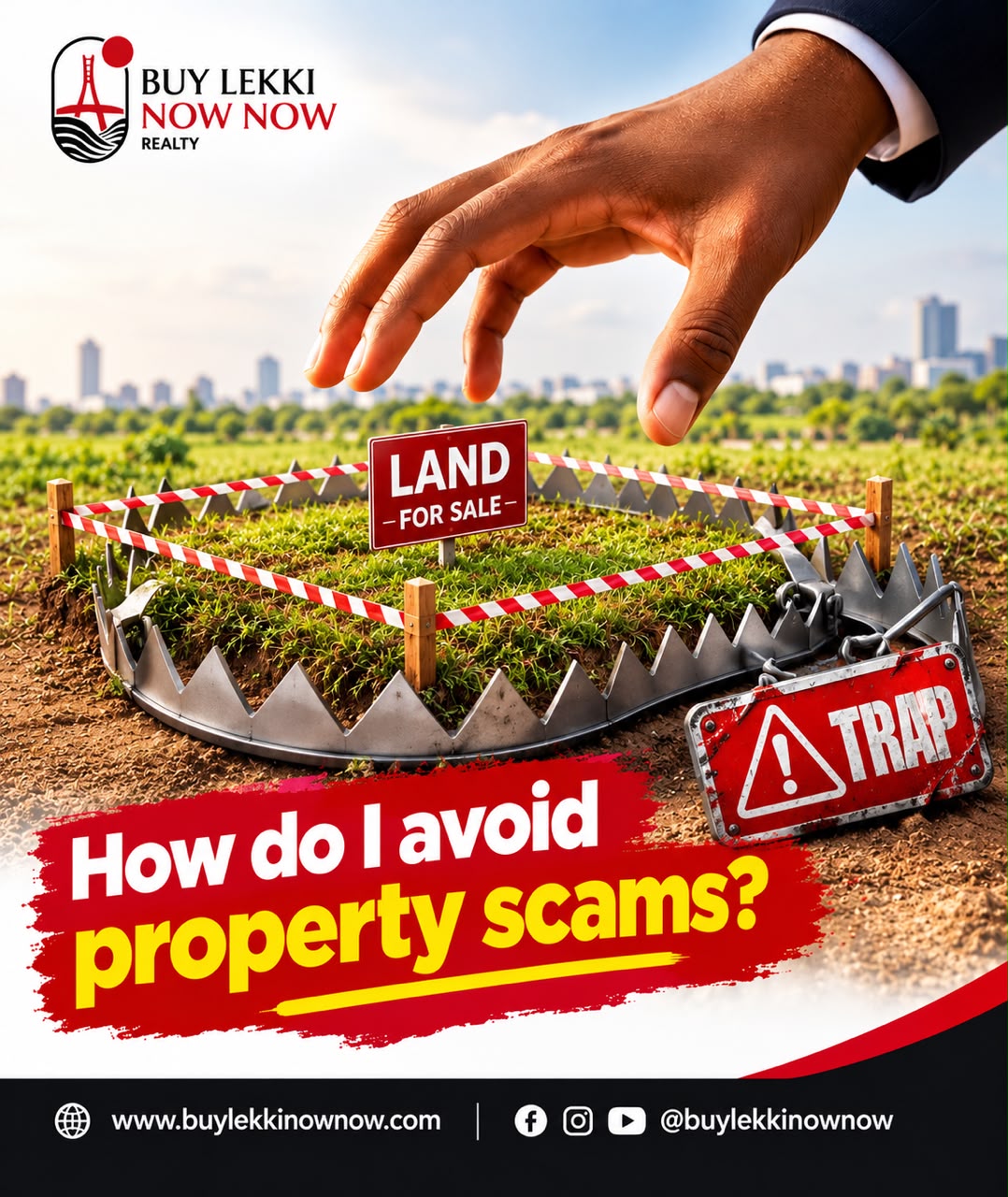
HOW DO I AVOID PROPERTY SCAMS IN NIGERIA?
What if the person selling you the land is genuine… but the land itself has a problem?
Sounds strange, right?
You visit the property.
You speak with the agent.
You see the documents.
The company has an office and an active social media page.
Everything looks fine.
Then one day, you discover something you never expected:
The person who sold you the property didn't have the right to sell it.
So, how do you avoid property scams in Nigeria?
The answer is simple: don't verify only the person selling the property; verify the property itself.
Before paying for land or a house, confirm the seller's identity, examine the property's title and survey, check its government status, review the transaction documents, and carry out proper legal and professional due diligence.
Because in real estate, what looks legitimate isn't always what is legally secure.
A CASE STUDY EVERY PROPERTY BUYER SHOULD UNDERSTAND
Imagine you find a plot of land in a rapidly developing part of Lagos.
The price looks attractive.
The agent has an office.
The company has social media pages.
You receive a receipt and allocation documents.
You even search the company through the Corporate Affairs Commission (CAC) and confirm that the company exists.
You think:
"Okay, this looks safe."
So you pay.
Months later, you discover that although the company is registered, the particular land you bought has a title problem.
What went wrong?
You verified the company.
You didn't verify the property.
And that distinction can cost you millions.
The CAC public search can help you verify registered companies and business entities, but company registration does not prove ownership of a particular piece of land.
SO, WHAT SHOULD YOU VERIFY BEFORE BUYING PROPERTY?
1. VERIFY THE SELLER
If you're dealing with a company, search the company through the official CAC public search and make sure the details correspond with the company presenting the property.
You can also look at relevant industry and regulatory checks.
For example, SCUML — the Special Control Unit Against Money Laundering — has a mandate covering real estate agents, developers and brokers, and its official platform provides options to check registration status and verify SCUML certificates.
You can also check whether a developer is associated with REDAN (Real Estate Developers Association of Nigeria), the umbrella body of the organised real estate sector in Nigeria.
But remember:
A verified company is only one part of your due diligence.
You still have to verify the property.
2. VERIFY THE PROPERTY TITLE
Don't just ask:
"Are the documents available?"
Ask:
"What documents are available, and can they be independently verified?"
Depending on the property, you may encounter documents such as:
• Certificate of Occupancy (C of O)
• Deed of Assignment
• Governor's Consent
• Gazette
• Registered Survey
• Other relevant title documents
The important question is whether the documentation supports the seller's interest in the property and can be independently verified.
This is where an independent property lawyer can be extremely valuable.
3. VERIFY THE ACTUAL LOCATION
Here's another one people sometimes overlook.
The land you inspected should be the land described in the documents.
Have the survey information checked by a qualified surveyor.
The property's location, boundaries and coordinates should correspond with the documentation you're relying on.
A salesperson pointing at a piece of land and saying, "This is your plot" is not the same thing as independent verification.
4. CHECK FOR GOVERNMENT OR PLANNING ISSUES
A property can look perfect and still have an underlying problem.
Before committing your money, investigate whether the property is affected by:
• Government acquisition
• Planning restrictions
• Existing interests
• Other issues that could affect ownership or your intended use
The fact that an area is developing quickly doesn't automatically mean every parcel within it is safe to buy.
5. DON'T LET PRESSURE REPLACE DUE DILIGENCE
You've probably heard these ones before:
"Sir, another client is ready to pay."
"The price goes up tomorrow."
"If you don't pay today, you may lose the plot."
Maybe the opportunity really is time-sensitive.
But your due diligence shouldn't be.
If you're about to commit millions of naira to property, taking a little extra time to verify it is better than spending years trying to fix a problem.
YOUR PROPERTY SAFETY CHECKLIST
Before making payment, ask:
✓ Who owns the property?
✓ What title does it have?
✓ Can the title be independently verified?
✓ Does the survey match the actual location?
✓ Is the property affected by acquisition or other restrictions?
✓ Is the seller properly identifiable?
✓ Has an independent property lawyer reviewed the transaction?
If you can't confidently answer these questions, don't let excitement make the decision for you.
LOOKING FOR PROPERTY WITHOUT THE STRESS?
This is exactly why proper due diligence matters at Buylekkinownow Realty.
For buyers looking for property in Elerangbe, Ibeju-Lekki, Lagos, Christianah Garden City with a C of O title is available at ₦20 million per plot.
The relevant property documentation and checks have been put in place as part of our process, so you can approach your purchase with greater confidence rather than simply taking someone's word for it.
And if you want to understand what you're buying before committing your money, we're happy to walk you through the property, documentation and verification process.
Your money deserves more than a promise. It deserves proper due diligence.
In real estate, verification should come before payment — not after a problem appears.
So before you buy your next property:
Verify the seller.
Verify the title.
Verify the land.
Then make your decision.
And if you'd rather start with a property where the necessary checks have already been taken seriously, speak with Buylekkinownow Realty about Christianah Garden City, Elerangbe, Ibeju-Lekki, Lagos.

 Back
Back